Knitting vs Crochet: What’s The Difference?
Knitting and crochet are two of the most popular crafts. When comparing knitting vs crochet we see they share some similarities like using yarn and a hand tool to make things like hats, blankets, clothing and even stuffed animals.
This often confuses beginners because they see knitting and crochet as the same craft and mix the two up. When I’m out in public I’ll be working on something and people often ask if I’m crocheting or knitting. I realized that although you make both with your hands, they differ in many ways, but people who aren’t familiar with them often mistake one for the other.
Understanding the difference between knitting vs crochet can help you decide which one you want to try at the beginning of your fibre arts journey. In this article I’ll explain what makes them different, some of the things each technique is good for and where to start if you’re a complete beginner.
Knitting vs Crochet: What Is Knitting?
Starting off with knitting this craft might be the most widely known. They will show in movies and tv shows a bunch of ladies sitting around with two sticks poking out. When looking at actors or actresses knitting on screen you can tell who knows what they’re doing and who is faking it. But how exactly does knitting work? I found there are three things to keep in mind with knitting.
How Knitting Works
- The first thing you need to know is when knitting you’re using at least two needles. When knitting something basic you use the needles to move things from the left needle to the right needle. The needles have a tapered tip with a blunt point so you don’t stab yourself. There are many different types of needles that we’ll discuss later but two is the standard when making anything. If you are working on something circular with a small circumference you might use what’s know as “Double Pointed Needles” which can mean you’re managing more needles than the standard two.
- The second thing you need to know about knitting is that you keep the yarn on the needles at all times. These are called “live stitches.” This means you’re actively building that section of the project. As you can imagine, this can cause some anxiety when you’re managing stitches. That’s what I thought when I started knitting: what if the stitches slip off! You can fix many mistakes when working with live stitches.
- I imagine them hanging out, standing in line on the needles, waiting for their turn to be worked. The stitches stay on the needles until you’re ready to close them through what’s known as “binding off.”
- The final thing you need to know is that knitting is made up of loops. You place the yarn in loops on the needles, and as you knit you create a series of interlocking loops with one row feeding into the next. These live loops remain on the needles until you bind them off. Different techniques can create different kinds of fabric, ranging from soft and swishy to flexible fabric that lays flat.
Common Knitting Tools
In knitting vs crochet, some tools are used by both crafts, like yarn and stitch markers, but each craft also has its own specific tools.
Here are some common knitting tools:
Straight needles
This is the most well known tool for knitting and the ones I started using when learning to knit. The needles are usually long to accommodate the live stitches for a project and have a cap, knob or end stopper so the live stitches don’t slide off the end. They come in a range of thicker or thinner needle circumference depending on the yarn you’re using.
Circular needle
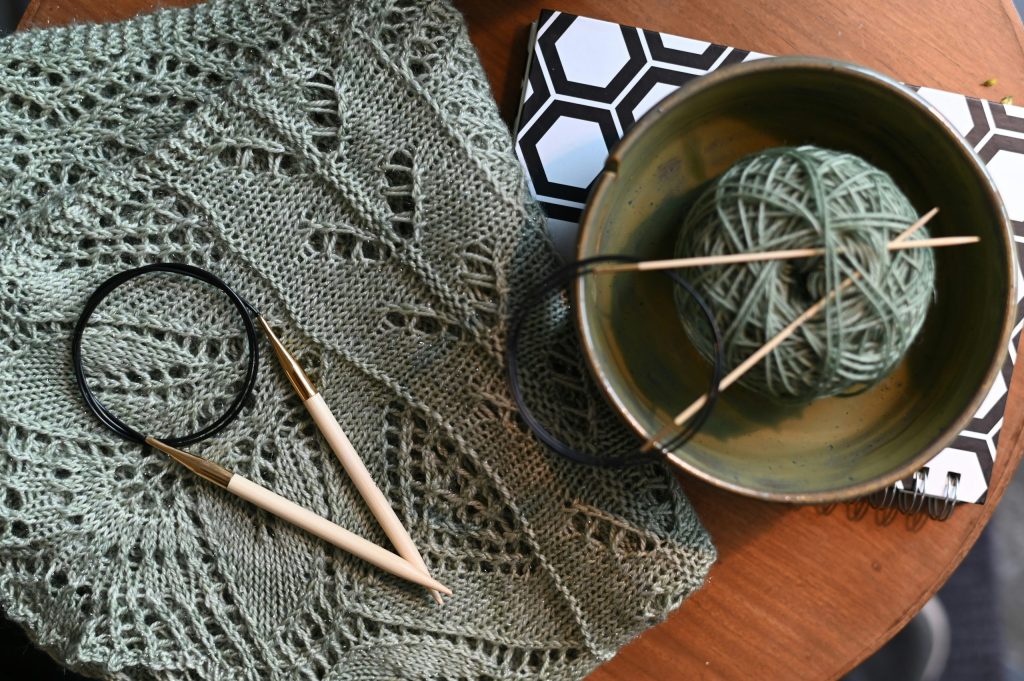
A more modern invention compared to the traditional straight needles. These are often shorter needles, commonly 4 or 5 inches in length, connected by a cable. These come in different thickness like the straight needles but the cable length can also be different. They make a variety of needles including ones with a fixed cable length as well as interchangeable needles. These are the ones I use them for pretty much every project. You can use these for working project “flat” or “in the round”.People report that the lighter materials of circular needles help reduce hand fatigue compared to traditional straight needles.
Double Pointed Needles
As mentioned above, you use double-pointed needles for circular projects. They were the main way to make circular items before people invented circular needles. As their name suggests, double-pointed needles have two points. Unlike straight needles, these don’t have a stopper at the end, so you can slip the loops on either side.
They often come in a set of five and just like the other needles come in different lengths. You use them by placing the live stitches on each needle and have a separate “working needle”. Depending on the size of the project you could have 2-4 double pointed needles with live stitches depending in the size of the project.
As you’re working up the project the working needle takes the place of the needle with the stitches and you have a new working needle when you finish that section.
Knitting vs Crochet: What Knitting Is Best For?
Knitting is a series of interlocking loops that creates a flexible fabric that lays flat. Depending on the fibre type and how tight the stitches are the fabric can also drape across bodies. This makes it idea for garments like sweaters, vest, shawls, etc. The flat loops also have a level of stretch which makes socks another great choice.
Another thing knitting is great for is detailed colour work. There are a few different ways to add colour to you projects such as stranded, mosaic or intarsia. Each technique has their pros and cons and different skill sets.
Knitting vs Crochet: What Is Crochet?
How Crochet Works
- The first thing you need to know about crochet is you only use one hook. You use the hook very differently than knitting needles. Where needles have stitches placed along as live stitches the hook only has one live stitch. With one hand holding the hook the other can hold the yarn to loop around it in different ways. There are many types of stiches but the most basic one is the slip stitch where you wrap the yarn around the hook and pull through. This creates a continuous change and is often where most projects start.
- The second thing you need to know is that you work the stitches one at a time. You create an active loop where you place the hook and move the yarn to build the project stitch by stitch. This makes it easy to pick up where you left off if you put the project down and means you can set it down without worrying about it sliding off the hook or unraveling.
- The third thing to keep in mind is that you work stitches as knots. You place the hook between stitches to pick up the yarn and pull it through. This is a unique technique with complex movements that machines can’t replicate. You cluster stitches into different knot patterns, like double crochet, to create different shapes and variations in your projects.
Common Crochet Tools
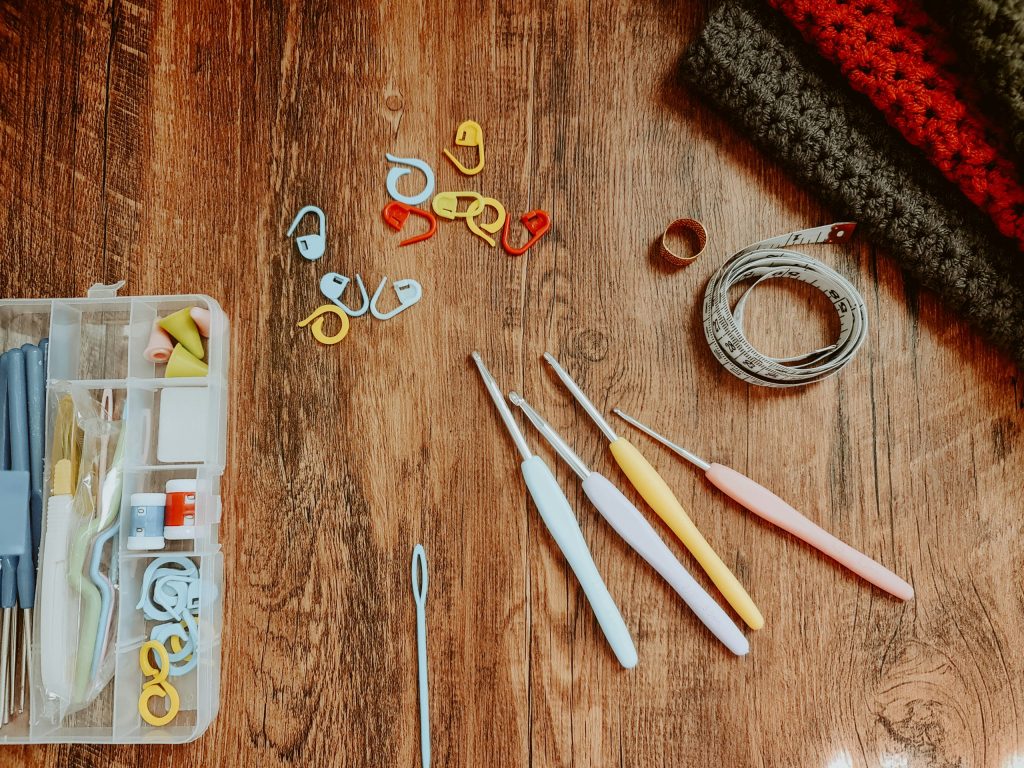
The most common tool for crochet is the crochet hook. Depending on the type of crochet the hooks can look a bit different. Tunisian crochet uses a long neck where other, more common crochet hooks, have a shorter neck with a space for your thumb.
Hooks come in a variety of materials, including wood, aluminum, and plastic. Manufacturers also make hooks with ergonomic handles. These handles make them easier to hold and use for long periods of time without your hands getting tired.
Knitting vs Crochet: What Crochet Is Best For?
Just like knitting, crochet is great for all kinds of clothing projects. You can make a vest with appliques, a sweater with interesting colourwork, or a trendy skirt. I love making headbands with crochet. They work up quick and there are lots of interesting patterns out there.
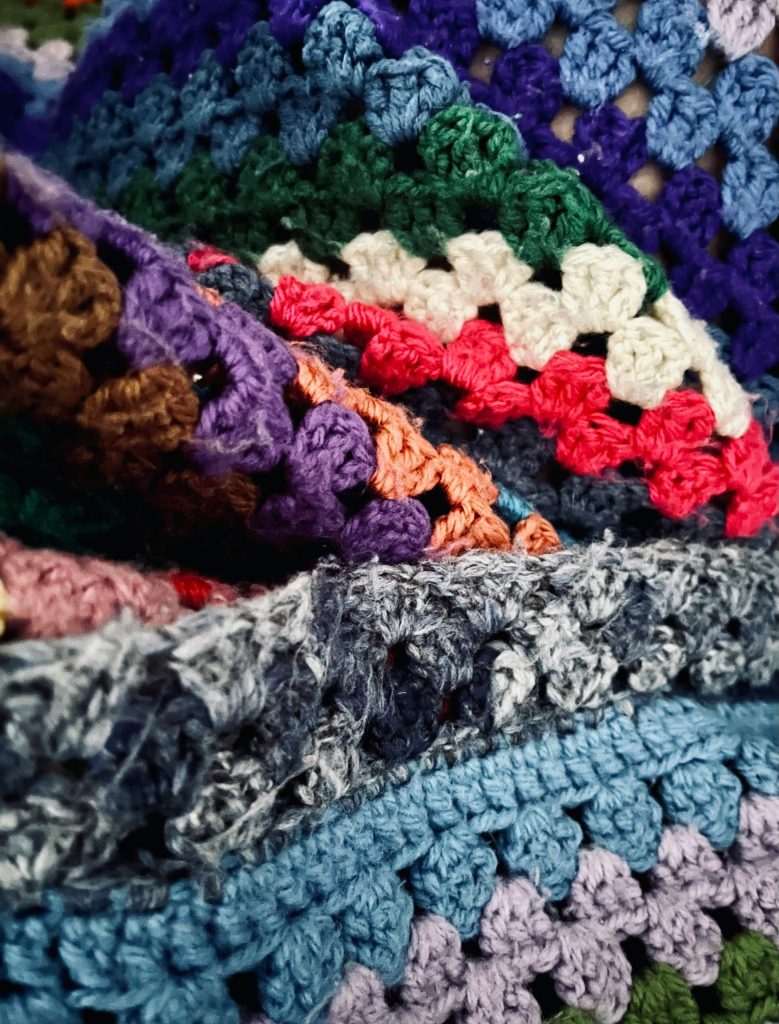
I also love making baby blankets using crochet. The granny stitch blanket is my favourite because the stitches are chunky with lots of airy holes in the blanket. Some blanket patterns like “insert pattern here” work up in a specific amount of days for a quick hand made gift.
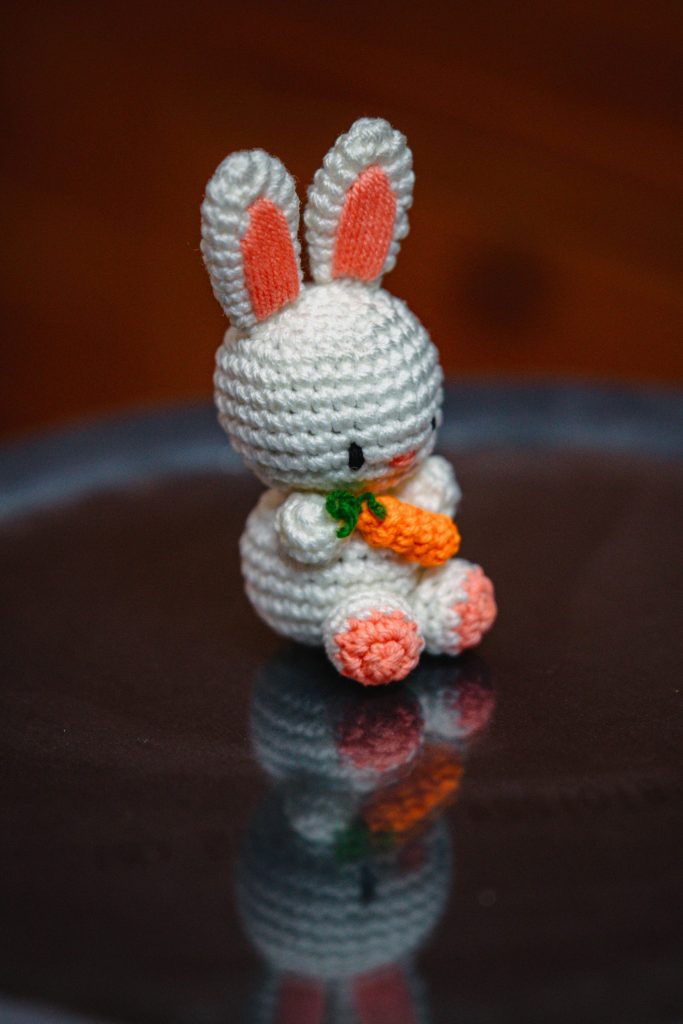
When I first learned crochet, I was interested in making toys called “amigurumi.” From learning to make a simple ball shape, you can build your skills to make things like the viral crochet bee, dolls with yarn hair, or even find independent patterns for dragons and other creatures. I find crochet very flexible, and the only thing stopping you is your imagination.
Knitting vs Crochet: Key Differences
Tools Used
The first key different in knitting vs crochet is the tools used.
Knitting usually requires two needles used to work the project. In some cases, like with double pointed needles, you use up to five needles.
In crochet we use a single hook. Depending on the type of crochet this could have a longer or shorter neck but they are mostly the same.
This might make crochet the more portable option as there is less tools to carry and you don’t have to worry about stitches falling off.
Stitches and Technique
The second difference when looking at knitting vs crochet is the way you create the stitches.
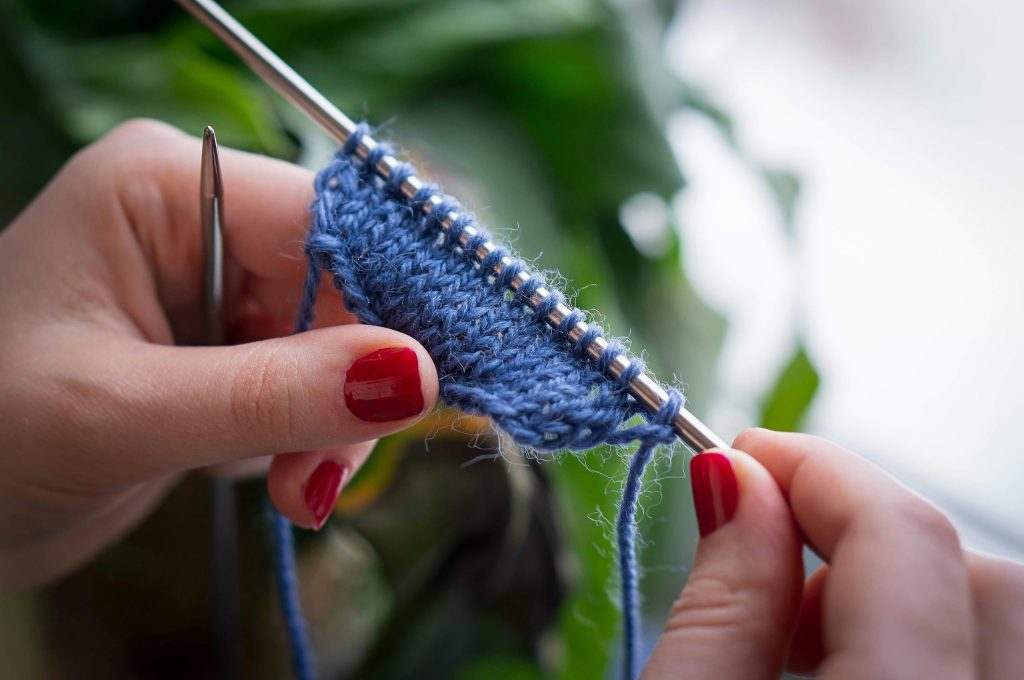
When you knit something, you place the stitches along the needles or attached cables. These are known as live stitches, and you work them from end to end. Knitting creates interlocking loops that can lay flat.
In crochet the project is worked as a series of knots and can’t be replicated by a machine. There are all kinds of stitches you can do to add texture or a unique appearance. Because the knots can be kind of bulky crochet uses a bit more yarn than knitting. This makes them great for stash busting project when you have some leftover yarn but not sure what to make with it.
Both use a different set of skills and some might find one technique easier than the other. I started by teaching myself to knit then learned crochet. I spent some time with crochet making a bunch of items before trying knitting again. Some people stick with one or learn both!
Speed and Project Time
The next difference in knitting vs crochet is the speed and project time.
When people first start learning they might find crochet is easier to pick up. Once you get the hang of the motion of the hook and yarn you’ll find projects get completed easily.
Knitting can also become fast once you get the hang of it. You can hold the yarn in different ways to speed up your knitting. When you hold the yarn in your left hand, you use “Continental Knitting,” which works quickly because you pick up the yarn with the needle. When you hold the yarn in your right hand, you use “English Knitting,” which is usually slower, but you can speed it up by flicking the yarn with your hand.
Fabric Look and Feel
The next difference is the type of fabric each craft makes.
Knitting creates interlocking loops which can lay flat. This also means there is a lot of stretch to the fabric making it a great option for garment project like sweaters. The way the loops interlock also allows it to drape and can create light and airy fabrics.
Crochet is a series of knots which creates a denser more stiff fabric. This makes it great for projects that need some structure like a plush toy or home décor like pillows. The knots can also create a squishy and airy fabric by adding clusters of knots with the granny stitch and making larger holes in the project.
Knitting vs crochet: Which should you choose?
So, when it comes to knitting vs crochet, there isn’t a clear winner. Both crafts use yarn to create beautiful handmade projects, but they do so in very different ways. Knitting uses two or more needles to create a fabric made of interlocking loops, while crochet uses a single hook to create stitches one at a time. Each technique has its own strengths, tools, and finished look.
The best craft for you depends on what you want to make and what kind of process you enjoy. If you love soft garments, stretchy fabrics, and detailed colourwork, knitting might be the perfect fit. If you’re interested in structured projects, quick finishes, or creating amigurumi toys, crochet may be the better choice. Neither craft is better than the other—they simply offer different creative possibilities.
The good news is that you don’t have to choose just one. Many fibre artists learn both knitting and crochet and enjoy switching between them depending on the project. Whether you pick up a pair of knitting needles or a crochet hook, you’re starting a creative hobby that can provide years of enjoyment. The most important thing is to choose the craft that excites you, grab some yarn, and getstarted.